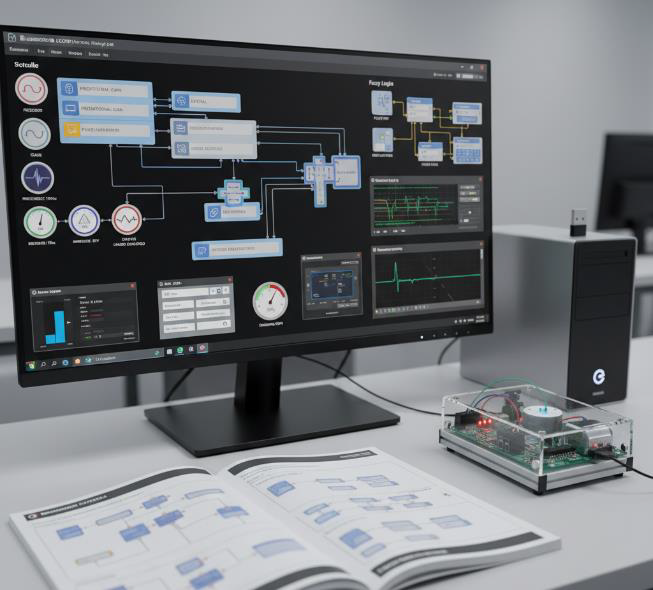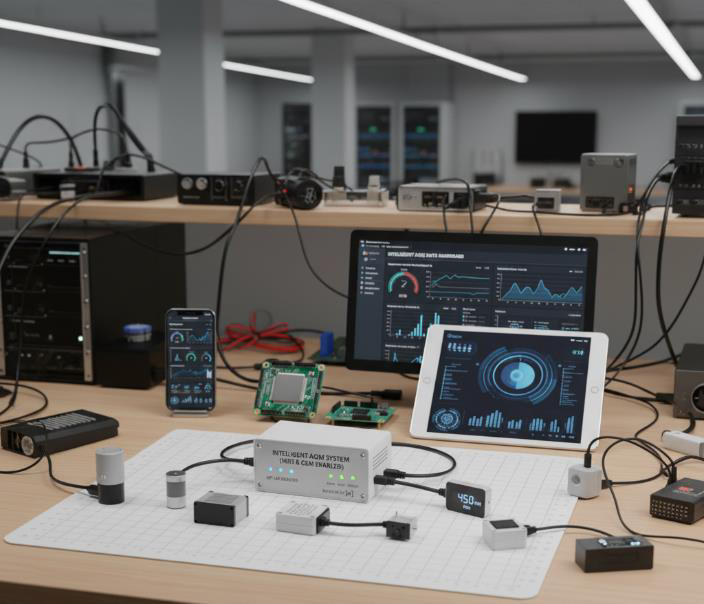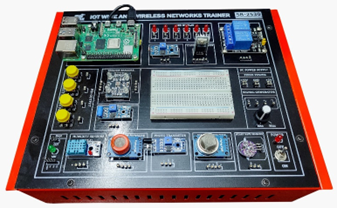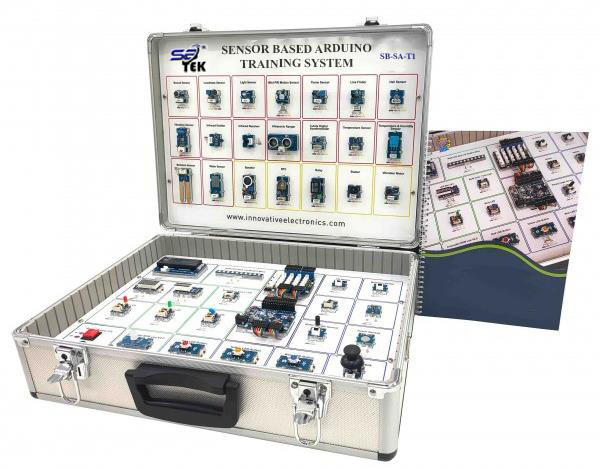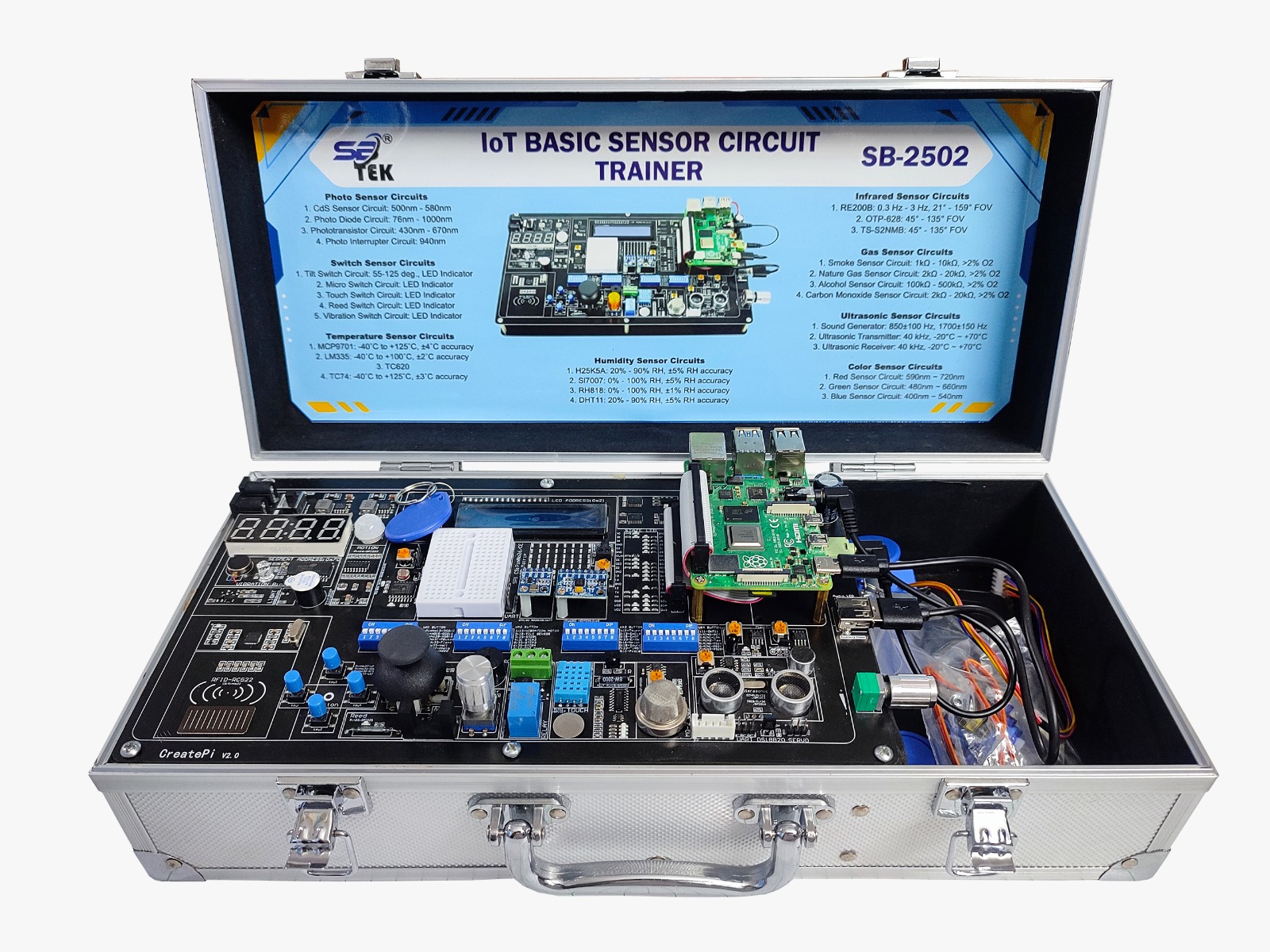
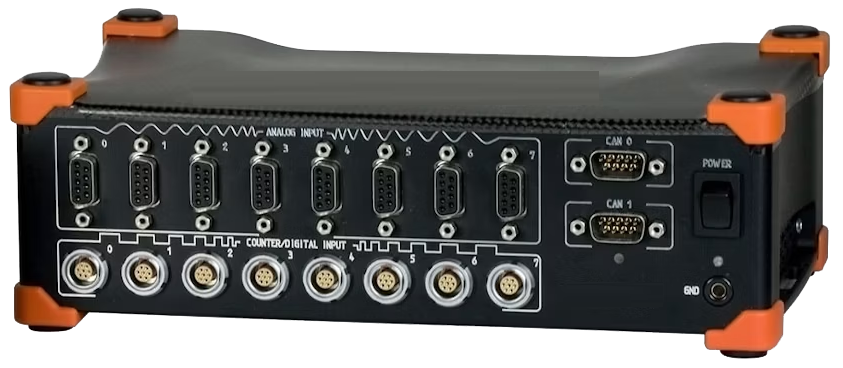
Features: Designed to gather data simply and quickly from laboratory tests. To use in stand-alone mode, with quantities shown on the graphic display and commands set by a joystick. Also, to be used in direct connection with a PC, via USB, to gather and process data (in digital and graphic form) via software.
Technical Specifications:
Powered by an external USB power supply (5 Vdc).
Powered via USB when connected with a PC.
USB Full Speed interface (12 Mbps) 2.0.
Serial interface RS-232.
Graphic Liquid-Crystal Display (LCD): 128 x 64 pixels.
Minimum 5-keys Joystick.
Sensors included: voltage, current, temperature, luminosity, magnetic field, absolute pressure of gases.
Number of analog inputs for internal sensors: 4 to 5.
Number of analog inputs for external sensors: 4 to 5.
Number of digital inputs: 3 to 4.
Number of analog outputs: 2 to 3.
Internal signal generator.
Max. sampling frequency per channel: 1 MHz.
Conversion resolution: 12 bits.
RAM: 2 MB or higher.
Voltage sensor range and resolution: -50 to +50 V and 16 bits.
Voltage sensor function: DC and AC measurements.
Current sensor range and resolution: -2 to +2 A and 16 bits.
Current sensor function: DC and AC measurements.
(Derived) Electric power function:
DC power. Active, reactive & apparent AC power. AC power factor and Frequency.
Temperature sensor range and resolution: -50 to +150°C and 12 bit.
Temperature sensor accuracy: ±0.1°C.
Luminosity sensor range and resolution: 0 to 150 klx and 12 bits.
Luminosity sensor spectrum: Visible light.
Magnetic field sensor range and resolution: ±6.4mT and 12 bit.
Magnetic field sensor type: Hall effect sensor.
Absolute pressure of gases sensor range and resolution: 0 to 200 kPa and 12 bits.
Gas sensor type: MEMS sensor.
Signal generator: Minimum 2 programmable voltage outputs for the signal’s generation.
Output voltage range: ±5 Vdc.
Continuous, sinusoidal, square wave, triangle wave signal output.
Converters resolution D/A: 12 bits.
Supplied with software of below specifications: Generic data acquisition software to gather data as function of time.
Display the value of individual parameters in real time.
Also, create graphs of each parameter versus time or versus each other. The acquisition mode can be continuous or selective by setting the number of acquisitions and the sampling interval.