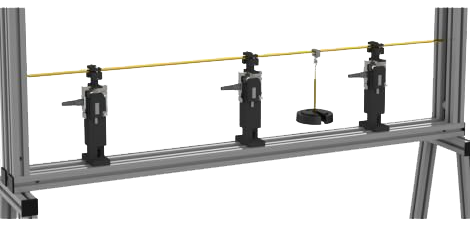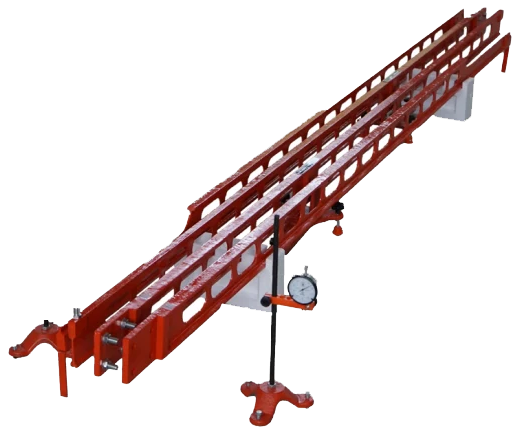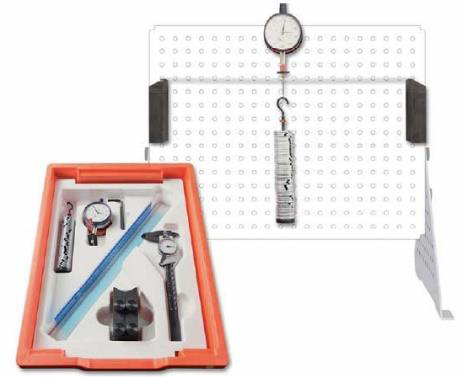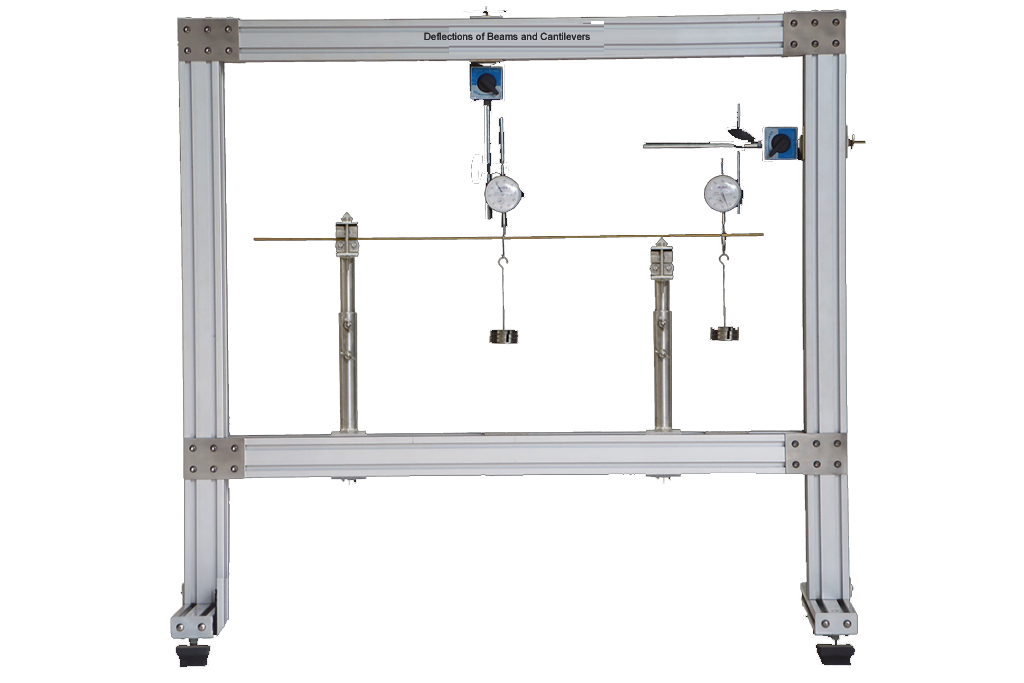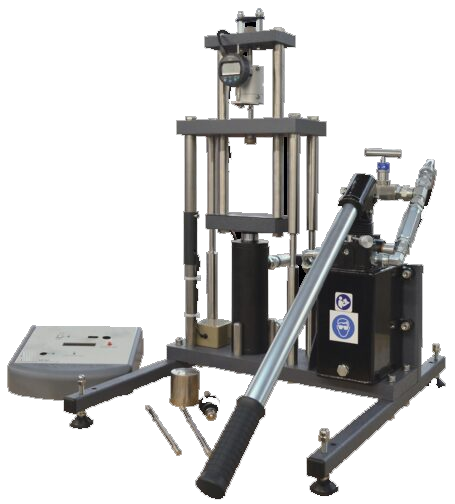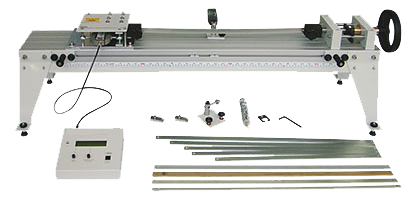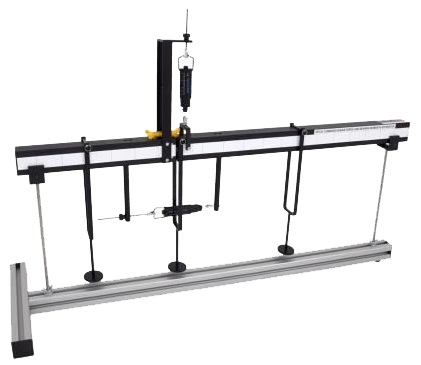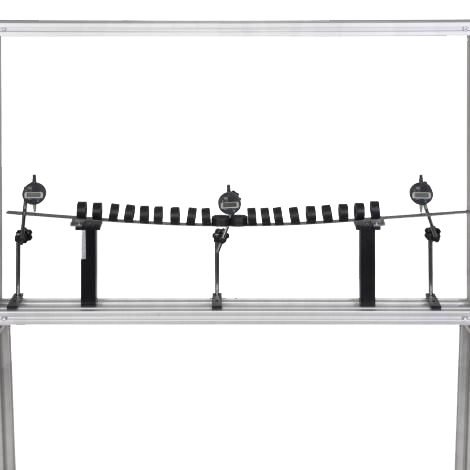
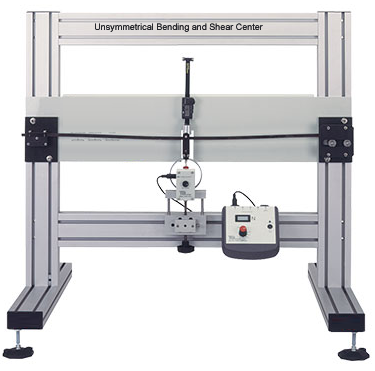
Features: Experiment for the study of the vertical and horizontal deflection of different unsymmetrical sections. Mount on the Structures platform and connect to Structures automatic versatile data acquisition system and software. Made in accordance with the latest European Union directives. Include specimen beams of three different cross-sectional shapes for increased experiment range Two different study areas in one product: shear center and bending High-resolution indicators for accurate measurements. Supplied with a storage tray to keep smaller items safe. Include Vernier caliper to allow measurement of cross-section. Manufactured in the China. This product help students understand symmetrical and non-symmetrical bending of three different beam shapes, including an equal ?L?, a ?U? and rectangular. It also find the shear center of the channel (?U?) beam. For the symmetrical and non-symmetrical tests, a chuck clamp a beam while allowing rotation on its axis and allowing loads to be
Learning Outcomes:
Show that shear center can be outside beam section boundaries.
Shear center of an unsymmetrical section.
Horizontal and vertical deflection in symmetrical and unsymmetrical sections at different loads and load angles.
Using Mohr?s circle to find principal axes and Second Moments of Area.
Technical Specifications:
Following items included as standard:
Two beam supports with two fixing methods.
Support with digital deflection indicator of resolution 0.01 mm or better.
Minimum five different beams of length 850 mm and nominal cross sections: Aluminum: 19 x 3.2 mm, 19 x 4.8 mm and 25.4 x 3.2 mm Brass: 25.4 mm x 3.2 mm Mild steel: 25.4 mm x 3.2 mm.
Cable and minimum nine mass hangers 50 x 20 g masses.
Hexagon tools for beam fixings Vernier caliper and storage tray.
Comprehensive user guide Software:
Along with data acquisition application allow students to simulate the hands-on laboratory experiments, verifying their results. Also, allow simulation of alternative setups, such as different beam cross-sectional shapes and material properties, extending the learning experience beyond the practical laboratory session.